

Does Evening Exercise Affect Your Sleep?
Is that evening run or gym session quietly wrecking your night? Here is what the best available reviews of evening exercise and sleep actually found, why the evidence is mixed, and how to test your own evenings over two weeks.
Short answer
For most healthy adults, evening exercise does not appear to harm sleep, according to a 2019 meta-analysis. The exception may be vigorous exercise that ends within about an hour of bedtime. Evidence is mixed, individuals differ, and the NHS still advises against exercising close to bed if you have insomnia.
Key facts
- A 2019 systematic review and meta-analysis in Sports Medicine (Stutz, Eiholzer and Spengler) included 23 studies of a single evening exercise session versus no exercise in healthy adults, and concluded the studies do not support the idea that evening exercise harms sleep.
- The same review said sleep might be impaired after vigorous exercise ending one hour or less before bed.
- A 2022 network meta-analysis of 28 studies found evening exercise completed before bedtime did not disrupt later sleep in healthy young and middle-aged adults.
- The NHS insomnia page advises exercising regularly during the day and not exercising at least 4 hours before bed.
In this article
- Does evening exercise hurt your sleep?
- What did the 2019 meta-analysis actually find?
- Do workout timing and intensity matter?
- Why might a late workout change your sleep?
- Do chronotype, fitness and sleep problems change the answer?
- What do health authorities advise?
- Who should be careful, and when should you see a clinician?
- How can you test your own evening workouts?
- Frequently asked questions
- Final thoughts
- Sources and further reading
Does evening exercise hurt your sleep?
Evening exercise does not clearly hurt sleep in healthy adults, according to the largest reviews, though evidence is mixed and very hard exercise close to bedtime is the main concern. Advice has traditionally said to avoid late workouts, so the research is worth looking at closely.
The Sleep Foundation calls the picture mixed: intense exercise in the three hours before sleep is traditionally thought to hurt sleep, yet some studies found no negative effects.
Late meals are another evening worry, and does eating late at night hurt your sleep? covers them.
Myth vs fact
Myth: Any exercise in the evening will keep you awake.
Fact: The 2019 meta-analysis concluded that the reviewed studies do not support the idea that evening exercise harms sleep in healthy adults. It flagged possible problems after vigorous exercise ending within an hour of bed.
What did the 2019 meta-analysis actually find?
Stutz, Eiholzer and Spengler (Sports Medicine, 2019) searched five databases, found 11,717 references and included 23 studies comparing one evening exercise session with no exercise in healthy adults. They concluded the evidence does not support harm from evening exercise, with one caveat about vigorous workouts.
Results
Compared with no exercise, evening exercise increased the time to reach REM sleep by 7.7 minutes and increased slow-wave sleep by 1.3 percentage points. It decreased stage 1 (light) sleep by 0.9 percentage points. The authors wrote that the studies do not support the hypothesis that evening exercise negatively affects sleep, and rather the opposite.
A higher temperature at bedtime was associated with lower sleep efficiency and more wake after sleep onset, and so was a higher level of physical stress (exercise intensity relative to a person's baseline activity). Running was associated with less wake after sleep onset than cycling.
Limits
The authors reported that all of these significant moderating effects disappeared after one study was removed, so they are fragile. The review covered single sessions in healthy adults, not people with insomnia or weeks of training. Only the abstract was available for this article, so full-paper details are not given.
Do workout timing and intensity matter?
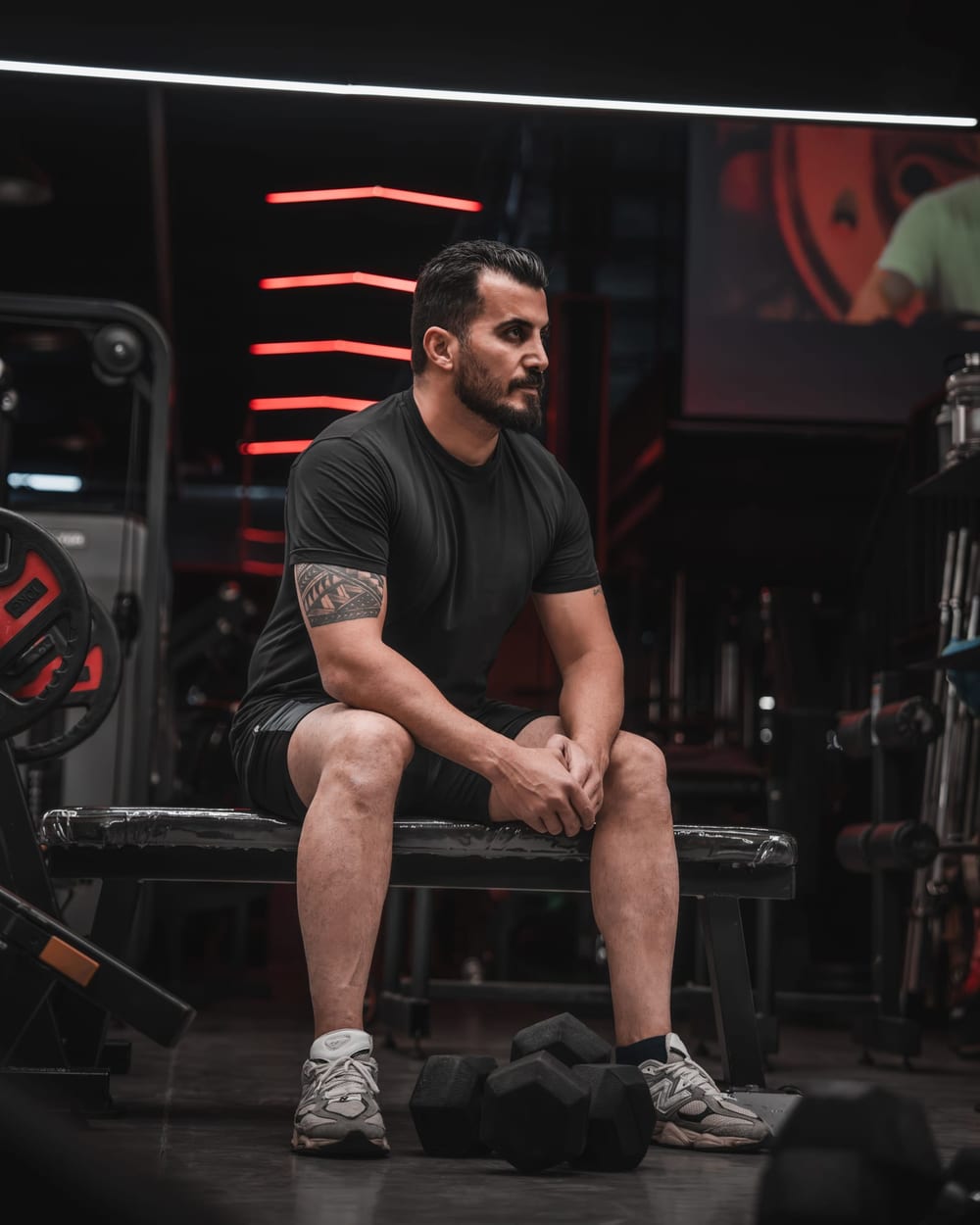
Workout intensity and how close the session ends to bedtime appear to matter more than the clock time itself. The 2019 meta-analysis flagged vigorous exercise ending one hour or less before bed as the situation where sleep might be impaired, while moderate evening exercise looked neutral or slightly positive.
A 2022 network meta-analysis (Yue and colleagues) of 28 studies and 325 participants found no significant differences between intensities, except that high-intensity evening exercise reduced REM sleep by about 2 percentage points compared with no exercise. Moderate exercise showed only trends, with intervals that included no effect.
A 2026 review in Sleep Medicine Reviews (Souabni and colleagues) compared morning with evening exercise across 25 studies. It found no clear overall advantage for morning exercise, but evening exercise was linked to more time awake after sleep onset, a finding the authors urged caution over because of possible small-study effects.
Recovery matters too, and how many rest days do you actually need? covers it.
| Situation | What the source reported | Source and strength |
|---|---|---|
| Any single evening session vs no exercise, healthy adults | Slightly longer REM latency, a little more slow-wave sleep, less stage 1 sleep; no evidence of harm overall | Stutz 2019 meta-analysis of 23 studies |
| Vigorous exercise ending 1 hour or less before bed | Sleep-onset latency, total sleep time and sleep efficiency might be impaired | Stutz 2019 conclusion, worded as "might" |
| High intensity vs no exercise, evening | About 2 percentage points less REM sleep; other measures not significantly different | Yue 2022 network meta-analysis, 325 participants |
| Evening vs morning exercise | No clear overall advantage for morning; more time awake after sleep onset with evening, interpreted with caution | Souabni 2026 review of 25 studies |
| Timing advice for people with insomnia | Do not exercise at least 4 hours before bed | NHS guidance, not a research finding |
Why might a late workout change your sleep?
A hard evening workout raises heart rate, body temperature and stress hormones, which is the usual explanation for why it might make falling asleep harder. These mechanisms are proposed, not proven, and the research above suggests many people sleep fine anyway.
Body temperature
The Sleep Foundation says intense exercise raises pulse, body warmth and stress hormones, which is why it has been thought to interfere with sleep. It also notes that a higher core temperature after intense workouts has been linked to lower sleep efficiency and more time awake after sleep onset. The 2019 meta-analysis found a similar association with bedtime temperature, though it did not hold once one study was removed.
Arousal and intensity
Physical stress in the 2019 review meant intensity relative to a person's usual activity, so the same session may be gentle for one person and a big effort for another.
Do chronotype, fitness and sleep problems change the answer?
Individual differences likely matter, but research on them is thinner than the headline reviews suggest. Chronotype (being a morning or evening type), baseline fitness and existing sleep problems may all shape how a late workout affects sleep, and most major reviews studied healthy adults only.
Chronotype
A 2021 questionnaire study in the Journal of Health Psychology (Glavin and colleagues) surveyed 909 college students. Evening exercisers had later bedtimes, poorer sleep quality and lower sleep efficiency than morning exercisers, and evening types reported poorer sleep quality than morning types. This is association, not proof: people who sleep late may simply exercise late.
Fitness and existing sleep problems
The 2019 review measured intensity relative to baseline activity, which hints that the same workout may be harder on less active people, though it did not claim that. The reviews covered healthy adults, so they cannot say how someone with insomnia will respond, which is why the NHS advice below is more cautious.
Luna Ring
Compare late workout nights with early workout nights
A ring records your sleep stages, heart rate and body temperature trend each night, so you can compare nights after late workouts with nights after early ones. Luna Ring is a smart ring, worn on a finger, that tracks sleep stages, heart rate, HRV, SpO2, body temperature trends, activity and recovery, with no subscription required. It shows differences between nights but cannot tell you what caused them.
What do health authorities advise?
Authorities differ. The NHS insomnia guidance says to exercise regularly during the day and not to exercise at least 4 hours before bed, while the Sleep Foundation says evening exercise may not be inherently harmful but hard exercise in the hour before bed can affect sleep quality.
The Sleep Foundation advises basing exercise times and intensity on what suits your sleep schedule, and names yoga, light stretching and breathing exercises as gentler options.
A practical reading: treat the NHS 4 hour rule as a sensible default if you struggle to sleep, and the research as reassurance if you sleep well. Caffeine from pre-workout drinks is a separate factor, and does caffeine really ruin your sleep? explains how it can interfere.
Who should be careful, and when should you see a clinician?
People with insomnia should be most careful, because the NHS advises them not to exercise at least 4 hours before bed. Anyone new to exercise, pregnant, or living with a medical condition should check with a clinician before changing their routine, and ongoing sleep trouble deserves a GP visit.
The NHS suggests seeing a GP if changing your sleep habits has not helped, if you have had trouble sleeping for months, or if insomnia makes daily life hard to cope with. The NHS also lists stress, anxiety, noise, alcohol, caffeine and some medical conditions and medicines among common causes of poor sleep, so a late workout is rarely the only suspect.
Chest pain, unusual breathlessness, dizziness or fainting during exercise are reasons to stop and get medical advice.
How can you test your own evening workouts?
A two-week comparison test is a simple way to see how your own sleep responds to late workouts. Keep the exercise the same, change only when it finishes, log your sleep each morning, and compare the weeks. It cannot prove cause, but it shows whether a pattern is worth acting on.
Try this: 2-week comparison test
- If you have a medical condition or insomnia, or are new to exercise, talk to a clinician before changing your routine.
- Week 1 (days 1 to 7): do your usual workouts so they finish at least 3 to 4 hours before bed. Keep bedtime, caffeine and alcohol as steady as you can.
- Week 2 (days 8 to 14): do the same type and intensity of workouts finishing within 1 to 2 hours of bed. Change nothing else.
- Each morning, note how long you think it took to fall asleep, how often you woke, and how rested you feel from 1 to 5. If you wear a sleep tracker, also note the sleep stages, resting heart rate and temperature trend it reports, treating them as estimates.
- On day 14, compare the two weeks. If one week was clearly better, repeat in reverse order to check it was not chance.
Two weeks from one person is a hint, not proof. Stop late workouts if they leave you wired or sleepless.
Frequently asked questions
How close to bedtime can I exercise?
There is no single proven cut-off. The 2019 meta-analysis said vigorous exercise ending one hour or less before bed might impair sleep, while the NHS advises people with insomnia not to exercise at least 4 hours before bed. Moderate sessions earlier in the evening look less risky, but individuals vary.
Is it better to work out in the morning or the evening for sleep?
A 2026 review found no clear overall advantage for morning exercise on most sleep outcomes, though evening sessions were linked to modestly more time awake after sleep onset, with a caution about small-study effects. The best time is probably the one you can keep doing consistently.
Does a high-intensity workout at night ruin sleep?
Not necessarily. A 2022 network meta-analysis found high-intensity evening exercise reduced REM sleep by about 2 percentage points versus no exercise, with no other significant differences. The 2019 review warned about vigorous sessions ending within an hour of bed, so very hard late workouts are the ones to watch.
Is light exercise or stretching in the evening fine?
Probably. The Sleep Foundation names yoga, light stretching and breathing exercises as gentler options that may suit the evening better than hard training. Studies mostly compared exercise sessions with no exercise, so evidence for any one gentle routine is limited. Pick whatever feels calming for you.
Does evening exercise affect deep sleep?
The 2019 meta-analysis found evening exercise increased slow-wave (deep) sleep by 1.3 percentage points compared with no exercise, a small difference. The 2022 network meta-analysis found only an uncertain trend for moderate exercise, so neither review shows a noticeable deep sleep change.
Should I stop evening workouts if I have insomnia?
The NHS advises against exercising at least 4 hours before bed if you have insomnia, and suggests regular exercise during the day instead. Studies in the reviews above were in healthy adults. If poor sleep has lasted for months, speak to a GP rather than relying on workout timing alone.
Final thoughts
Here is the short recap.
- For healthy adults, reviews do not show that evening exercise harms sleep, but vigorous sessions ending within an hour of bed may.
- Findings are mixed, come from studies of healthy people, and individuals differ, so the NHS keeps a 4 hour rule for insomnia.
- A two-week comparison of your own early and late workouts is the most useful test.
Your turn: Do you sleep better after morning or evening workouts? Tell us in the comments.
Luna Ring
Track your own trends with Luna Ring
Sleep stages, heart rate, HRV, SpO2, body temperature trends, activity and recovery in a ring worn on your finger. No subscription required.
Sources and further reading
- Stutz J, Eiholzer R, Spengler CM. Effects of Evening Exercise on Sleep in Healthy Participants: A Systematic Review and Meta-Analysis. Sports Medicine, 2019.
- Yue T, Liu X, Gao Q, Wang Y. Different Intensities of Evening Exercise on Sleep in Healthy Adults: A Systematic Review and Network Meta-Analysis. Nature and Science of Sleep, 2022.
- Souabni M, et al. Effects of morning versus evening exercise on sleep: a systematic review of comparative studies with a meta-analysis of randomized controlled trials. Sleep Medicine Reviews, 2026.
- Glavin EE, Ceneus M, Chanowitz M, Kantilierakis J, Mendelow E, Mosquera J, Spaeth AM. Relationships between sleep, exercise timing, and chronotype in young adults. Journal of Health Psychology, 2021.
- NHS. Insomnia. NHS.
- Sleep Foundation. Exercise and Sleep. Sleep Foundation.
Keep reading
General information only, not medical advice. It does not replace guidance from a qualified healthcare professional. Speak to one about any health concern.