Why Is VO2 Max Linked to Living Longer?
Why does a number on a treadmill test seem to predict who lives longer? Here is what VO2 max is, what large studies actually show, what they cannot prove, and a 7-day plan for building fitness safely.
Short answer
VO2 max is linked to living longer because large studies find that people with higher cardiorespiratory fitness have lower death rates. That is an association, not proof. Fitness also reflects genetics, health and habits. Regular aerobic activity can raise fitness, and watch or band estimates are rough guides, not lab results.
Key facts
- A 2018 Cleveland Clinic study of 122,007 patients who had treadmill tests found that elite performers had an adjusted hazard ratio for death of 0.20 compared with low performers. It was observational, so it cannot show cause.
- A 2009 JAMA meta-analysis of 33 studies (102,980 participants for all-cause mortality) found a relative risk of 0.87 for death per 1 MET higher fitness.
- A 2016 American Heart Association statement links low cardiorespiratory fitness with higher risks of cardiovascular disease and death.
- A 2022 meta-analysis of 14 validation studies found that wearable VO2 max estimates can be reasonable on average, but individual errors were large.
- The WHO says people who are insufficiently active have a 20% to 30% increased risk of death compared with people who are sufficiently active.
In this article
- What is VO2 max?
- What do large studies show about fitness and living longer?
- Does a higher VO2 max cause a longer life?
- How accurate are watch and band VO2 max estimates?
- Can you raise your VO2 max, and what works?
- What does a 7-day plan to build fitness look like?
- Who should check with a clinician before hard exercise?
- Frequently asked questions
- Final thoughts
- Sources and further reading
What is VO2 max?
VO2 max is the highest rate at which your body can take in and use oxygen during hard exercise, usually written in millilitres of oxygen per kilogram of body weight per minute. It is a common way to describe aerobic fitness, meaning how well lungs, heart and muscles work together.
The lab measure and the broader idea
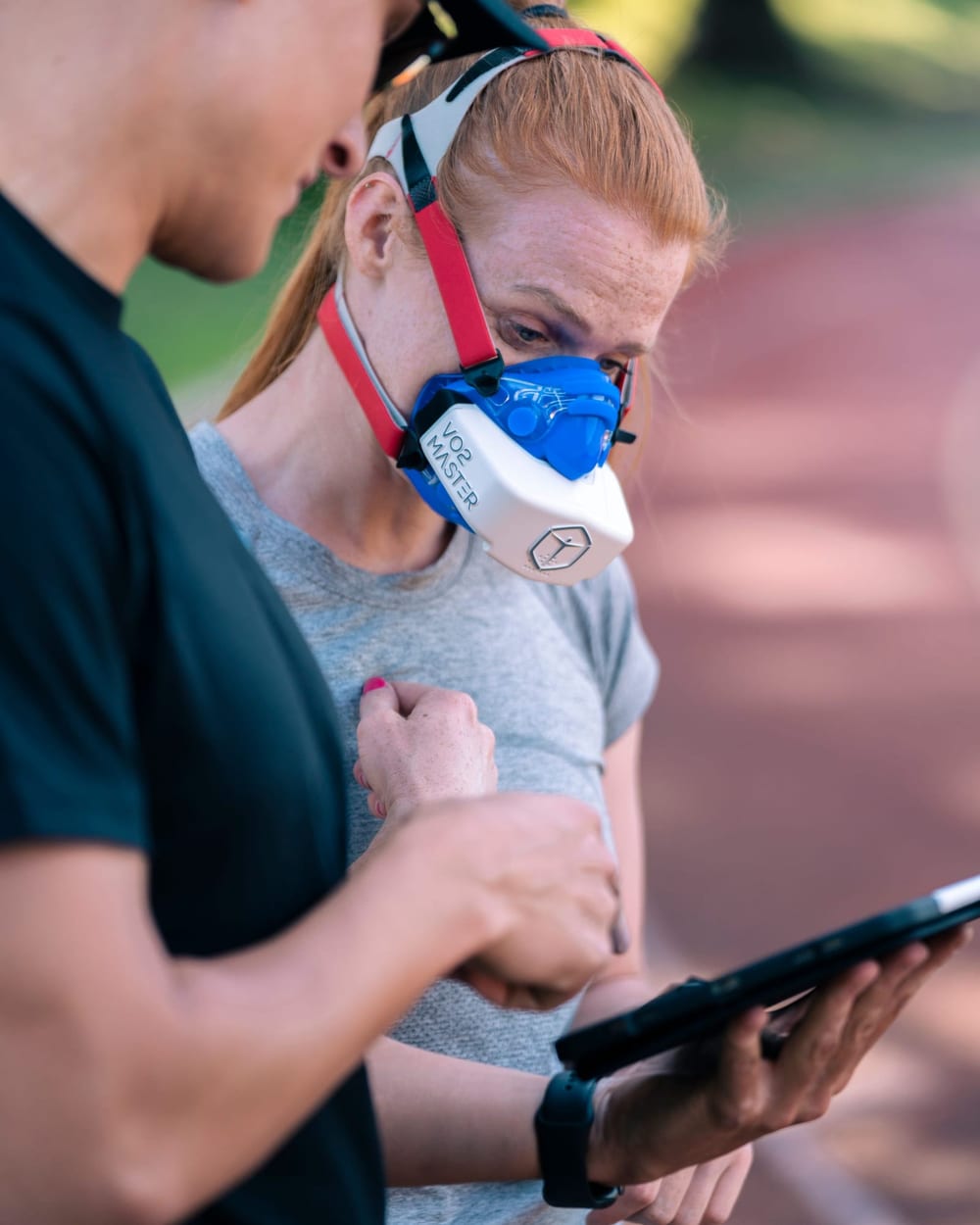
In a lab, VO2 max is measured directly, typically with a mask that analyses your breath during exercise to exhaustion. Studies below often use cardiorespiratory fitness, measured as treadmill performance and expressed in METs, a unit of energy use relative to rest. It is related to VO2 max, but not identical.
What do large studies show about fitness and living longer?
Large studies consistently find that higher cardiorespiratory fitness goes with lower risk of death. A 2018 cohort study, a 2009 meta-analysis and a 2016 American Heart Association statement all point the same way, though each shows an association, not proof of cause.
The 2018 Cleveland Clinic study
Mandsager and colleagues, writing in JAMA Network Open (open access), analysed 122,007 patients who had exercise treadmill tests at the Cleveland Clinic between 1991 and 2014. People were grouped from low to elite fitness for their age and sex,, with a median follow-up of 8.4 years.
Crude death rates fell from 23.7% in the low group to 2.6% in the elite group. After adjustment, elite performers had a hazard ratio of 0.20 compared with low performers. The authors also reported that the risk linked with low fitness was comparable to or greater than the risk linked with coronary artery disease, smoking and diabetes.
The authors noted that the design was retrospective, unmeasured factors may matter, and patients may not match the general population.
The 2009 JAMA meta-analysis
Kodama and colleagues pooled 33 studies (102,980 participants and 6,910 deaths for all-cause mortality). Each 1 MET higher fitness was linked with a relative risk of 0.87. People with low fitness (under 7.9 METs) had a relative risk of 1.70 compared with people with high fitness (10.9 METs or more).
The 2016 American Heart Association statement
Ross and colleagues wrote that low fitness is associated with higher risk of cardiovascular disease, all-cause mortality and some cancer deaths. They called fitness a potentially stronger predictor of mortality than several established risk factors.
Does a higher VO2 max cause a longer life?
Nobody has shown that a higher VO2 max by itself causes a longer life. The big studies are observational: they compare groups of people and cannot rule out other explanations. Fitness is shaped by genes, existing health, age, and habits, and each of those can also affect how long someone lives.
Why the link may run both ways
Someone with an undiagnosed illness may perform poorly on a fitness test and die earlier without low fitness being the cause. This is called reverse causality.
What the evidence does support
Physical activity has a stronger case for benefit than the test number. The WHO reports a 20% to 30% higher risk of death in insufficiently active adults.
Myth vs fact
Myth: A high VO2 max guarantees a long life, and a low one means a short life.
Fact: The studies describe average differences between large groups. They cannot predict one person's lifespan or prove that raising the number adds years.
How accurate are watch and band VO2 max estimates?
Watch and band VO2 max figures are estimates from an algorithm, and the research suggests they can be reasonable on average but unreliable for any one person. A lab test measures the oxygen you breathe; a wearable infers fitness from heart rate, movement and personal details.
What the validation review found
A 2022 systematic review and meta-analysis in Sports Medicine (Molina-Garcia and colleagues) pooled 14 validation studies with 403 participants. Devices using exercise-based information had a small average bias of minus 0.09 ml per kg per minute, but the limits of agreement ran from about minus 9.9 to plus 9.7. Devices using resting information overestimated by 2.17 on average, with wider limits.
Error in running tests ranged from 8% to 10.2%, above manufacturer claims of about 5%. The authors concluded that individual error was too large for clinical use. Studies were mostly in healthy, young, active adults, and 79% were rated at high risk of bias.
How to use an estimate sensibly
Treat it as a trend, not a verdict.
Luna Band
Watch an estimated trend, not a single number
Luna Band offers VO2 max and training load tracking plus heart-rate zones, so you can see an estimated trend alongside your effort over months. An estimate is not a lab test, and Luna's published accuracy figures (company-reported) cover heart rate, HRV and steps, not VO2 max.
Can you raise your VO2 max, and what works?
Yes, regular aerobic training raises VO2 max in most healthy adults studied, with both steady and interval training working. Gains vary between people, and the effect on lifespan is less certain. Evidence that raising VO2 max extends life is far thinner than evidence that it improves fitness.
Daily movement also counts. For more on that, read is walking 10,000 steps a day really necessary?
Intervals versus steady training
A 2015 meta-analysis in Sports Medicine (Milanovic and colleagues) combined 28 controlled trials with 723 healthy young to middle-aged adults (average age about 25). Compared with no exercise, high-intensity interval training raised VO2 max by about 5.5 ml per kg per minute and continuous endurance training by about 4.9. Interval training was possibly better than endurance training by a small margin of 1.2.
Steady training therefore remains a sound choice.
What health agencies recommend
The CDC and the NHS both advise at least 150 minutes of moderate-intensity activity a week or 75 minutes of vigorous activity (or an equivalent mix), plus muscle-strengthening activity on at least 2 days a week.
| Approach | Example | What the evidence says |
|---|---|---|
| Moderate steady activity | Brisk walking or easy cycling, where you can talk but not sing | Core of CDC and NHS guidance (150 minutes a week); endurance training raised VO2 max in the 2015 meta-analysis |
| Vigorous activity | Running, fast cycling, swimming | CDC and NHS count 75 minutes a week of vigorous activity as an alternative to moderate activity |
| Interval training | Short hard efforts with easy recovery between | Possibly a small extra VO2 max gain over steady training in young, healthy adults (2015 meta-analysis) |
| Strength training | Resistance bands, bodyweight, weights, 2 days a week | Recommended by CDC and NHS for general health; the sources here do not test its effect on VO2 max |

What does a 7-day plan to build fitness look like?
A sensible 7-day plan mixes mostly moderate sessions with one or two harder efforts, two strength sessions and at least one easy or rest day. The example below follows CDC and NHS weekly guidance, not a prescription from the studies, so adjust it to your fitness.
Recovery matters as much as effort. See how many rest days you actually need for more.
Try this: 7-day experiment
- Day 1: 30 minutes of brisk walking or easy cycling at a pace where you can talk but not sing.
- Day 2: 20 to 30 minutes of strength work for legs, hips, back, chest, shoulders and arms.
- Day 3: Rest or a gentle walk.
- Day 4: 30 minutes at a moderate pace. If you are healthy and used to exercise, add 4 efforts of 1 minute that feel hard, with 2 minutes of easy movement between them.
- Day 5: A second strength session of 20 to 30 minutes.
- Day 6: 30 to 45 minutes of moderate activity you enjoy.
- Day 7: Rest or easy movement. Note how you felt and your total active minutes for the week.
Who should check with a clinician before hard exercise?
People who have not exercised for some time, or who have medical conditions or concerns, should speak to a GP or clinician before starting hard exercise. The NHS gives this advice, and it matters most for vigorous or interval efforts.
Strength work has its place alongside aerobic fitness. See how much strength training you need each week for the basics.
Conditions and situations to raise first
Speak to a clinician first if you have heart or lung disease, high blood pressure, diabetes, chest symptoms, unexplained breathlessness, or are pregnant, or take medicines that affect heart rate. The NHS notes that exercise can trigger angina.
Warning signs while exercising
The NHS says to call 999 for tight or squeezing chest pain, pain spreading to the arms, neck or jaw, severe breathlessness, or pale, blue or grey skin. The NHS says not to drive yourself to hospital.
Frequently asked questions
What is a good VO2 max for my age?
A good VO2 max depends on age, sex and how it is measured, and the sources used here do not give age tables. A clinician or exercise physiologist can interpret a lab result, and trends matter more than any single number.
Can you improve VO2 max at any age?
Probably to some degree, but the evidence here is mostly from young and middle-aged adults. The 2015 meta-analysis averaged about 25 years old, and its subgroup analysis suggested interval training may suit older participants somewhat better. Check with a clinician first if you have health conditions.
Is a smartwatch VO2 max reading accurate?
A smartwatch VO2 max reading is an estimate with a wide error range for individuals. A 2022 meta-analysis found limits of agreement of about 10 ml per kg per minute either side of the lab value for exercise-based devices. Use it to watch your own trend, not as a diagnosis.
Does exercise add years to your life?
Physical activity is linked with lower risk of death, but the studies cannot say exactly how many years it adds. The WHO reports a 20% to 30% higher risk of death in insufficiently active people, so regular movement is worth building into your week.
Do I need HIIT to raise VO2 max?
No, high-intensity intervals are not required. In the 2015 meta-analysis, steady endurance training raised VO2 max by about 4.9 ml per kg per minute compared with no exercise, while HIIT raised it by about 5.5. Choose what you can do consistently.
When should I stop exercising and get help?
Stop and seek urgent help for tight or squeezing chest pain, pain spreading to the arm, neck or jaw, severe breathlessness, or pale, blue or grey skin. The NHS advises calling 999 and not driving yourself. For milder symptoms, see a GP.
Final thoughts
Here is the short recap.
- Large studies link higher cardiorespiratory fitness with lower death rates, but they show association, not proof.
- Watch and band VO2 max estimates can show a rough trend, yet individual error is large compared with a lab test.
- Regular moderate and vigorous activity, plus strength work, is the evidence-backed way to build fitness, and a clinician can help if you have health concerns.
Your turn: Do you track your fitness, and has a number ever surprised you? Tell us in the comments.
Luna Band
Track your own trends with Luna Band
Sleep, heart rate, HRV, stress and recovery insights in one band, with up to 10 days of typical battery life. No subscription required.
Sources and further reading
- Mandsager K, et al. Association of Cardiorespiratory Fitness With Long-term Mortality Among Adults Undergoing Exercise Treadmill Testing. JAMA Network Open, 2018.
- Kodama S, et al. Cardiorespiratory fitness as a quantitative predictor of all-cause mortality and cardiovascular events in healthy men and women: a meta-analysis. JAMA, 2009 (Europe PMC record).
- Ross R, Blair SN, Arena R, et al. Importance of Assessing Cardiorespiratory Fitness in Clinical Practice: A Case for Fitness as a Clinical Vital Sign. Circulation, 2016 (Europe PMC record).
- Molina-Garcia P, et al. Validity of Estimating the Maximal Oxygen Consumption by Consumer Wearables: A Systematic Review with Meta-analysis and Expert Statement of the INTERLIVE Network. Sports Medicine, 2022.
- Milanovic Z, Sporis G, Weston M. Effectiveness of High-Intensity Interval Training (HIT) and Continuous Endurance Training for VO2max Improvements: A Systematic Review and Meta-Analysis of Controlled Trials. Sports Medicine, 2015.
- World Health Organization. Physical activity fact sheet. who.int, accessed 2026.
- Centers for Disease Control and Prevention. Physical Activity Guidelines for Adults. cdc.gov, accessed 2026.
- NHS. Physical activity guidelines for adults aged 19 to 64. nhs.uk, accessed 2026.
- NHS. Heart attack. nhs.uk, accessed 2026.
- NHS. Angina. nhs.uk, accessed 2026.
Keep reading
General information only, not medical advice. It does not replace guidance from a qualified healthcare professional. Speak to one about any health concern.