Unlock Your Potential: An Interview with a Champion on Tarmac - Susa Fly
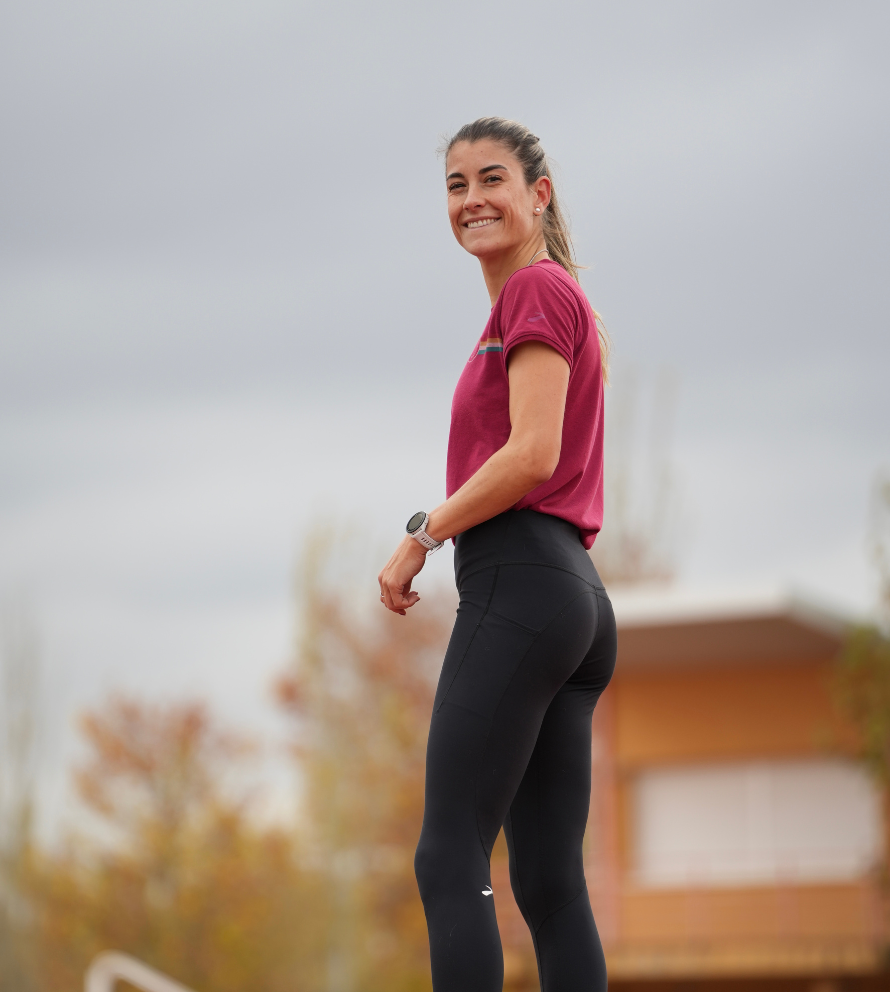
A single race doesn’t define an athlete—but the dedication behind every stride does. From sprinting over hurdles to conquering middle-distance tracks, Susana’s journey is one of evolution, resilience, and an unwavering passion for movement.
In our Unlock Your Potential series, we dive into her story—a former pro athlete turned coach, guiding others to push past their limits while still chasing new heights herself.
Read on to discover what it truly means to live and breathe the sport.
A little about yourself, about Susana.
I am passionate about sports and movement—it's the center of my life. I used to be a professional 100m hurdles athlete, and now I’m fully dedicated to athletics in a different way. I work as an online running coach and compete in middle-distance track events, though no longer professionally. Beyond running, I love climbing mountains, cycling, and traveling.
How do you manage to balance training, coaching, and personal time?
I manage it quite well. I’ve always taken great care of my physical and mental health because it’s essential for my performance, and that’s a lesson I’ve internalized even though I’m no longer a professional athlete. As an entrepreneur, I know many struggle to disconnect, but I’ve always been clear that I’m not “my own boss” to overwork myself more than I would for someone else. My daily priorities are my training, personal growth, and nurturing my relationships. After that comes work.
You have impeccable timing in Ultra de Gredos 2024 - Media Maratón de Gredos. What did you do to achieve this? How does it feel to be one of the best athletes?
During the early months of each season, I focus on building a high mileage base, which allows me to excel in these kinds of races. This year, I spent all of August focusing on aerobic training—cycling and running—because, at the end of that month, I ran the Camino de Santiago over five days, covering 120 km in total. That gave me a solid aerobic base, and when combined with the strength training I’ve been doing for years, it helped me secure first place in the 26k Ultra de Gredos.
Do you see yourself transitioning to longer-distance races in the future?
I haven’t considered running a full marathon just yet. I’m a very disciplined person who believes that when you commit to something, you have to give it your best. Marathon training requires a specific type of preparation that doesn’t align with the 800m and 1500m track events I currently focus on. I’m sure I’ll run a marathon in the future, but for now, I’d rather guide my athletes toward achieving their marathon goals instead of running one myself.
Walk us through a typical day in your life when you’re training for a major race.
I usually wake up without rushing, making sure I’ve had at least 8 hours of sleep. The first thing I do is a routine of stretching and core exercises to activate my body and prevent injuries. After that, I prepare breakfast and spend the morning working on my computer, coaching my runners.
After lunch, I relax a bit by reading, and in the afternoon, I focus on my training session, which could be intervals, an easy run, or strength training, depending on the day. In the evening, I wind down after dinner, usually watching a show with my partner.
What are your go-to recovery strategies after an intense training session?
After a hard session, I usually have a protein shake with creatine and a piece of fruit, as it’s a great combination for recovery. Once I’m home, I use a massage gun to relax my muscles, and I finish the day with a nutritious dinner to fully recover.
How has technology influenced your training and performance over the years?
It’s a great tool that provides insights you can’t detect on the surface. For me, the most important metrics from the Luna Ring are HRV, temperature, and resting heart rate. If any of these variables are off, I pay close attention and adjust my training if needed.
What specific insights has the Luna Ring provided that have improved your training?
Yes, skin temperature, resting heart rate, and tracking my menstrual cycle.
What upcoming competitions are you most excited about?
On February 8th, I’ll compete in the Madrid Winter Athletics Championship, aiming for a medal in the 1500m event. After that, on February 16th, I’ll try to break 1h30 in the Barcelona Half Marathon, and on March 9th, I’ll aim for a sub-1-hour time in the Hyrox Mixed Doubles in Valencia.
Outside of athletics, what hobbies or passions bring you joy?
I especially love traveling and hiking in the mountains. There’s such a sense of freedom in both. I also enjoy reading a lot.
If you could give one piece of advice to aspiring athletes, what would it be to unlock their potential?
Focus on the details. Once you’ve got your training, rest, and nutrition dialed in, things like supplementation, technology like the Luna Ring, recovery tools, or mental training can make a huge difference.
How do you help your students stay motivated and push past mental barriers in training?
Your mind needs training, too. Every time you go out for a run when you don’t feel like it, or every workout where your mind keeps telling you that you can’t go on—but you do—you’re preparing to break records. Most of the time, when your mind says, “I can’t,” it’s lying.
From dominating the 100m hurdles to clinching victory in the Ultra de Gredos, Susana’s journey is a testament to endurance, adaptability, and the relentless pursuit of excellence. Her transition from a professional sprinter to a top-tier middle-distance runner and coach proves that unlocking potential is about evolution, discipline, and the right balance between passion and preparation.
As she gears up for new challenges—including her next big race—Susana continues to inspire runners worldwide with her dedication and expertise.
Stay tuned for more conversations in our Unlock Your Potential series, where we explore the stories of athletes and fitness enthusiasts who push boundaries and turn ambition into achievement.