What Is Sleep Inertia and Why Are the First 30 Minutes So Groggy?
Why do you feel foggy, slow and half asleep for a while after the alarm goes off, even after a full night in bed? Here is what researchers know about sleep inertia, what seems to shorten it, when it matters for safety, and a 7-day routine test you can run yourself.
Short answer
Sleep inertia is the temporary grogginess and impaired thinking that follows waking. It is usually worst in the first minutes and often fades within 15 to 60 minutes, though it can last longer after sleep loss or waking at night. Steady sleep and avoiding sleep debt help most; many quick fixes have limited evidence.
Key facts
- A 2019 review in Nature and Science of Sleep (Hilditch and McHill) describes sleep inertia as a temporary period of sleepiness, disorientation and impaired cognitive performance after waking.
- The same review says performance usually recovers in about 15 to 30 minutes, while full recovery can take 1 to 3.5 hours; the Sleep Foundation gives a typical range of 15 to 60 minutes.
- Sleep loss and waking near the body's circadian low (the early hours of the morning) make sleep inertia worse.
- Whether waking from deep slow-wave sleep makes grogginess worse is mixed in the research; some studies find an effect and others do not.
- The 2019 review found no clear evidence that any countermeasure applied after waking reliably gives an immediate, measurable benefit.
In this article
- What is sleep inertia?
- How long does sleep inertia last?
- What makes sleep inertia worse?
- What helps sleep inertia, and how strong is the evidence?
- Is sleep inertia dangerous?
- How can you test your morning routine for a week?
- When is morning grogginess a reason to see a clinician?
- Frequently asked questions
- Final thoughts
- Sources and further reading
What is sleep inertia?
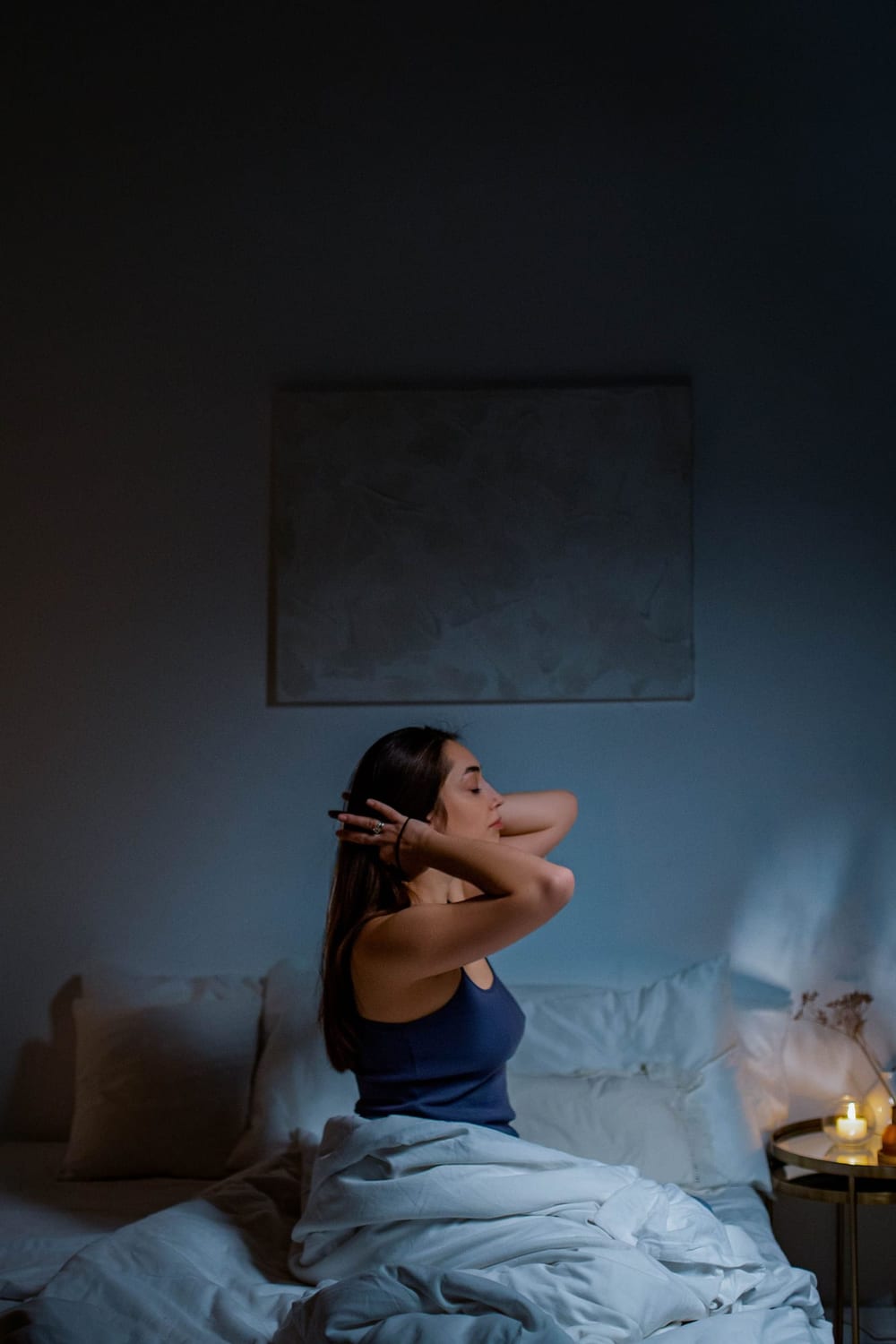
Sleep inertia is the temporary period of sleepiness, disorientation and weaker mental performance that follows waking up. Researchers treat it as a distinct state, different from both sleep and full wakefulness, rather than simply being tired. Almost everyone has felt it, especially after being woken abruptly.
What it feels like
In a 2017 review in Sleep Medicine Reviews, Trotti described the main features as impaired performance, sleepiness and a pull back toward sleep.
Why it happens
The Sleep Foundation lists three leading ideas: lingering slow brain waves, high levels of the sleep-linked chemical adenosine, and lower blood flow to the brain on waking. These remain hypotheses, and no single explanation is settled.
A related timing question is covered in why you often wake up just before your alarm.
How long does sleep inertia last?
Sleep inertia often lasts about 15 to 30 minutes for performance to return to baseline, but estimates vary from 15 to 60 minutes, and a full recovery can take several hours. The length depends on how much sleep you had, when you woke and what kind of sleep you woke from.
The 2019 review by Hilditch and McHill reports that the biggest effects occur within the first 30 minutes after waking. It also notes that some measures keep improving for 1 to 3.5 hours, in a gradual, flattening curve. The Sleep Foundation says sleep inertia generally lasts 15 to 60 minutes and sometimes a few hours.
Myth vs fact
Myth: If you still feel foggy 20 minutes after waking, you are just lazy or need more willpower.
Fact: Measurable impairment after waking is well documented, and it can be larger after sleep loss. Evidence on how to cut it short is limited, so a groggy start is not a character flaw. If it is severe or lasts for hours most days, see a clinician.
What makes sleep inertia worse?
Sleep deprivation, waking near the circadian low, and waking at night are the best-supported factors that make sleep inertia worse. Napping longer, or taking a long nap when sleep pressure is high, may also deepen grogginess, although the evidence on sleep stage is mixed.
Sleep loss
Hilditch and McHill report that prior sleep loss makes sleep inertia much worse. They describe a study in which people woken from recovery sleep after 64 hours without sleep performed worse than if they had stayed awake.
Time of day
Impairment is greatest when you wake around the body's circadian low, the point of lowest core body temperature, which is typically in the small hours. Trotti notes that sleep inertia intensifies with awakenings at night. For many people, that means a 3 a.m. wake-up is groggier than a 9 a.m. one.
Deep sleep and nap length
Studies disagree on whether waking from deep slow-wave sleep causes worse inertia. The review found some evidence of larger effects after longer naps of about two hours under high sleep pressure. The Sleep Foundation advises keeping naps under 30 minutes, and the review says naps that short may reduce, but do not remove, inertia.
Caffeine timing is one habit you can adjust, covered in does caffeine really ruin your sleep.
What helps sleep inertia, and how strong is the evidence?
Getting enough sleep and avoiding wake-ups at the circadian low are the most sensible steps, while most quick fixes after waking have limited evidence. Hilditch and McHill concluded there is currently no clear empirical evidence to fully support any reactive countermeasure for an immediate, objective effect.
The table below summarises what the 2019 review and the Sleep Foundation say. The strength labels are a plain-language summary of how that evidence reads, not a formal grading.
| Approach | What the sources say | Evidence strength |
|---|---|---|
| Avoid sleep loss | Sleep loss worsens inertia (Hilditch and McHill 2019) | Stronger |
| Keep naps under 30 minutes | Reduces but does not remove inertia; advised by Sleep Foundation | Moderate |
| Avoid waking at the circadian low where possible | Impairment is worst near the temperature low | Moderate |
| Caffeine taken before a short nap | Described as the best-supported proactive option, but evidence is limited | Limited to moderate |
| Caffeine after waking | Effects are delayed, so the first minutes stay groggy; may disturb later sleep | Limited |
| Bright light after waking | No objective performance gain in the studies reviewed, some subjective gain | Weak |
| Sound or music | Promising, but one study found an effect at 1 a.m. and not at 4 a.m. | Weak |
| Exercise on waking | No published studies found in the review; advice is anecdotal | Very weak |
Luna Band
See your sleep and wake-time patterns, not your grogginess
Luna Band tracks sleep time and wake-time patterns, so you can compare them with how you rate your own mornings across a week or two. It cannot measure grogginess or choose the best moment for you to wake up. Luna publishes company-reported accuracy results and states that no sensor is right for every body in every moment.

Is sleep inertia dangerous?
Sleep inertia can be a safety risk when you must act quickly or drive soon after waking, because attention, reaction and decision making are temporarily impaired. The risk is most relevant for shift workers, on-call staff and anyone woken at night, rather than for a typical morning at home.
What the real-world evidence shows
The 2019 review cites impairment in tasks such as a fire management task, a military enemy attack exercise and putting on a space suit. It also describes a retrospective analysis of more than 400 US Air Force accidents, in which pilot-error accidents were most common during the first hour after waking. That is an association from records, not proof of cause.
Practical safety steps
If your work or home life means waking suddenly, allow a buffer before driving, operating machinery or making critical decisions. The research does not give a precise safe wait time, so err on the side of caution.
Clock changes shift your body timing, as explained in what the clock change does to your sleep and heart.
How can you test your morning routine for a week?
You can test your morning routine by changing one thing at a time for seven days and rating your grogginess at fixed times after waking. Because the research on quick fixes is thin, your own notes are a sensible way to see what, if anything, works for you.
Try this: 7-day experiment
- Pick one change only, such as a consistent wake time, getting outside or opening curtains within 10 minutes of waking, or a gentler alarm sound.
- Keep bedtime, caffeine timing and alcohol as steady as you can for all seven days.
- When you wake, note the time and whether you woke by alarm or on your own.
- Rate your grogginess from 1 (clear) to 5 (very foggy) at 5, 15 and 30 minutes after waking.
- Write one line about the night before: roughly how long you slept and any night waking.
- If you use a sleep tracker, compare its sleep time and wake-time patterns with your ratings. Treat any link as a pattern to explore, not proof of cause.
- After seven days, compare the average ratings with the week before. If nothing changed, try a different single change next week.
| Day | Wake time | Grogginess at 5 min | At 15 min | At 30 min | Notes |
|---|---|---|---|---|---|
| Mon | 6:30 a.m. | 4 | 3 | 2 | Slept about 6 hours |
| Tue | 6:30 a.m. | 3 | 2 | 1 | Went to bed earlier |
| Wed | 5:00 a.m. | 5 | 4 | 3 | Early flight, woke in the dark |
When is morning grogginess a reason to see a clinician?
Morning grogginess is worth raising with a clinician if it lasts for hours, happens most days, or comes with heavy daytime sleepiness despite enough time in bed. Ordinary sleep inertia fades within an hour or so, so a much longer or more severe pattern may point to another cause.
Sleep drunkenness
Trotti describes sleep drunkenness as pronounced confusion on waking in people with hypersomnolence disorders such as idiopathic hypersomnia, and notes that it is hard to treat. Only a clinician can assess these conditions.
Warning signs from NHS advice
The NHS advises seeing a GP if you have been tired for a few weeks without knowing why, or if tiredness affects your daily life. For possible sleep apnoea, the NHS says to see a GP if your breathing stops and starts while you sleep or if you always feel very tired during the day.
Frequently asked questions
Is sleep inertia normal?
Yes, sleep inertia is a normal, temporary response to waking, and most people notice it at some point. Researchers describe it as impaired performance and sleepiness that fade over time. It is more noticeable after sleep loss or waking at night, and worth discussing with a clinician if severe.
Why do I feel worse after a long nap?
Longer naps may leave you groggier, though the research on sleep stage is mixed. The Sleep Foundation advises keeping naps under 30 minutes, and the 2019 review says short naps can reduce but not remove sleep inertia. A long nap under high sleep pressure appears most likely to cause heavy grogginess.
Does coffee help sleep inertia?
Caffeine blocks adenosine receptors and raises alertness, but timing matters. The 2019 review describes caffeine taken before a short nap as the best-supported option, while caffeine after waking acts with a delay. Too much, especially late in the day, can harm later sleep.
Can I snooze my alarm to ease into the day?
Evidence is lacking, so no one can say snoozing helps. Light sleep fragments between alarms are not the same as consolidated rest, and repeated alarms may simply prolong the fog. A single alarm at a consistent time is a simple option to test in the 7-day experiment.
Is it safe to drive right after waking up?
It is safest to wait a while, because attention and reaction time are impaired right after waking. Research has not set an exact safe delay, and effects are bigger after sleep loss or night waking. If you were woken suddenly or slept badly, allow extra time before driving.
When is grogginess a sign of a sleep disorder?
Grogginess that lasts for hours, occurs most days, or comes with persistent daytime sleepiness deserves a clinician's review. The NHS advises seeing a GP if you always feel very tired during the day or tiredness affects daily life. A GP can look for causes such as sleep apnoea.
Final thoughts
Here is the short recap.
- Sleep inertia is a normal, temporary state of grogginess and impaired performance after waking, often easing within 15 to 60 minutes.
- Sleep loss and waking near the circadian low make it worse, while most quick fixes after waking have limited evidence.
- Allow a buffer before driving or safety-critical tasks, and see a clinician if grogginess lasts for hours or comes with heavy daytime sleepiness.
Your turn: How long does it take you to feel properly awake, and what has made the biggest difference? Tell us in the comments.
Luna Band
Track your own trends with Luna Band
Sleep, heart rate, HRV, stress and recovery insights in one band, with up to 10 days of typical battery life. No subscription required.
Sources and further reading
- Hilditch CJ, McHill AW. Sleep inertia: current insights. Nature and Science of Sleep, 2019.
- Trotti LM. Waking up is the hardest thing I do all day: Sleep inertia and sleep drunkenness. Sleep Medicine Reviews, 2017 (PubMed record, abstract).
- Sleep Foundation. Sleep Inertia. sleepfoundation.org, accessed 2026.
- NHS. Tiredness and fatigue. nhs.uk, accessed 2026.
- NHS. Sleep apnoea. nhs.uk, accessed 2026.
- NHS. Insomnia. nhs.uk, accessed 2026.
Keep reading
General information only, not medical advice. It does not replace guidance from a qualified healthcare professional. Speak to one about any health concern.