

Is Boxing a Good Workout? Energy Use, Fitness and Safety
Is boxing a good workout, or just a good way to get hurt? Here is what studies say about heart rate, fitness and injuries, and a 4-week beginner plan.
Short answer
Non-contact boxing training, such as bag work, pad work and shadow boxing, can be a demanding cardio workout, and small studies suggest it may improve fitness. Sparring and competition add head impact and concussion risk that non-contact training largely avoids. The evidence is mostly small studies, so check with a clinician first if you have health conditions.
Key facts
- In 14 elite male amateur boxers, a 3 by 3 minute pad routine averaged about 160 beats per minute and a bag routine about 150 (2018).
- A 2015 pilot trial in adults with abdominal obesity (12 consented) found boxing training improved body fat, systolic blood pressure and absolute VO2max more than brisk walking.
- A 2022 meta-analysis of 17 studies found amateur boxers sustained about 1 injury every 2.5 hours of competition and every 772 hours of training.
- A 2007 systematic review rated the evidence on chronic brain injury in amateur boxing as poor and found no strong evidence of a link, which is not proof of safety.
In this article
- Is boxing a good workout?
- How hard is boxing training? Heart rate and energy use
- Does boxing training improve fitness?
- Which boxing sessions are hardest and riskiest?
- How do you protect your hands, wrists, shoulders and back?
- Is sparring safe? Head impact and concussion
- Who should check with a clinician first, and how do you choose a gym?
- What does a 4-week beginner fitness-boxing plan look like?
- Frequently asked questions
- Final thoughts
- Sources and further reading
Is boxing a good workout?
Boxing training without contact, such as bag work, pad work, shadow boxing and circuits, can be a good workout: studies of boxers report high heart rates, and small trials in adults with health risks report some fitness gains. Sparring and competition are a different activity with head injury risk, and the overall evidence is small and mixed.
Non-contact fitness training means bag or pad work, shadow boxing and circuits, with nobody aiming at your head. Sparring and competition involve opponents hitting each other. Most studies here are small and use trained male boxers, so findings may not fit a beginner.
How hard is boxing training? Heart rate and energy use
Boxing training can reach high intensity, but the numbers depend on who is punching and how fast. In 14 elite amateur boxers, a 3 by 3 minute bag routine averaged about 150 beats per minute and a pad routine about 160. Those are trained athletes, not beginners, so a class may feel easier or harder.
What the studies measured
Finlay and colleagues (2018) had 14 male elite amateur boxers do the same 3 by 3 minute routine on a bag and on pads. Pads gave higher average heart rate (160 against 150) and blood lactate, while the bag was more mechanically demanding.
El-Ashker and colleagues (2018) studied 11 elite male amateur boxers in a simulated semi-contact bout against handheld pads. Peak heart rate reached 176 to 182 beats per minute, 90 to 92 percent of maximum.
Calories and intensity in practice
No paper opened for this article gave a reliable calorie figure for beginners, so none is quoted here. A better gauge is effort: the NHS describes moderate activity as being able to talk but not sing, and vigorous activity as managing only a few words.
Does boxing training improve fitness?
Boxing training may improve fitness, but the trials are small and few. In a 2015 pilot randomised trial of adults with abdominal obesity, 12 weeks of boxing training improved body fat percentage, systolic blood pressure and absolute VO2max more than matched brisk walking, and the authors asked for larger trials.
Cardio fitness is tied to long-term health, as covered in why VO2 max is linked to living longer.
What the pilot trial found
Cheema and colleagues randomised adults with abdominal obesity to boxing or brisk walking, four sessions a week for 12 weeks. The boxing group attended more sessions (79 percent against 55 percent). Two boxing participants had adverse events and continued with modified exercise. The groups were tiny.
Myth vs fact
Myth: Boxing is the best workout for fitness.
Fact: The evidence does not show that boxing beats other vigorous exercise. The pilot trial compared it with brisk walking in a small group and called for larger trials. The best workout is often the one you keep doing.

Which boxing sessions are hardest and riskiest?
Boxing session types differ in intensity and risk: shadow boxing and light bag work sit lower, pad work and fast bag rounds sit higher, and sparring and competition add head impact. The table below mixes sourced figures with an illustrative guide, labelled clearly, so treat the intensity and risk columns as a rough aid, not measured data.
| Session type | Contact to the head | Typical intensity (illustrative) | Main risk (illustrative) | What the sources say |
|---|---|---|---|---|
| Shadow boxing | None | Light to vigorous, set by your pace | Overuse of shoulders and back | No study opened for this article |
| Heavy bag | None | Moderate to vigorous | Hands, wrists, shoulders | Average heart rate about 150 in elite boxers; more mechanical load than pads (Finlay 2018) |
| Pad work with a coach | None if coached well | Vigorous | Technique and upper limb strain | Average heart rate about 160 in elite boxers (Finlay 2018) |
| Sparring | Yes | Vigorous | Head impact, concussion | Upper limb sprains and strains most common in training (Alevras 2022) |
| Competition | Yes | Very high | Head and neck injury | Head and neck most often injured (Alevras 2022) |
The 2022 figures cover amateur boxers who may spar, so they do not describe a non-contact class.
Luna Band
See how hard your class or bag session really was
Luna Band tracks heart-rate zones and training load, so you can check how much of a boxing round you spent working hard and how the week adds up. It does not count punches or judge technique. Luna states that no sensor is right for every body in every moment (company-reported accuracy).
How do you protect your hands, wrists, shoulders and back?
Hands, wrists, shoulders and back are best protected by learning technique from a qualified coach, using hand wraps and well-fitted gloves, and building bag volume gradually. A 2022 meta-analysis found the upper limb was the most injured area in amateur boxing training, mostly sprains and strains.
Rest matters as much as the rounds. If you are unsure how much recovery you need between hard sessions, see how many rest days you actually need.
Hands and wrists
Ask your coach to show you how to wrap your hands and keep the wrist in line with the forearm. Sore wrists are a cue to stop and ask for help.
Shoulders and back
Fast punching loads the shoulders, and rotating loads the lower back. In the Finlay study, the bag was more mechanically demanding than pads, and loads were higher at the lower back than the neck. Avoid long, hard bag sessions every day while new, and have pain that lingers checked by a GP or physiotherapist.
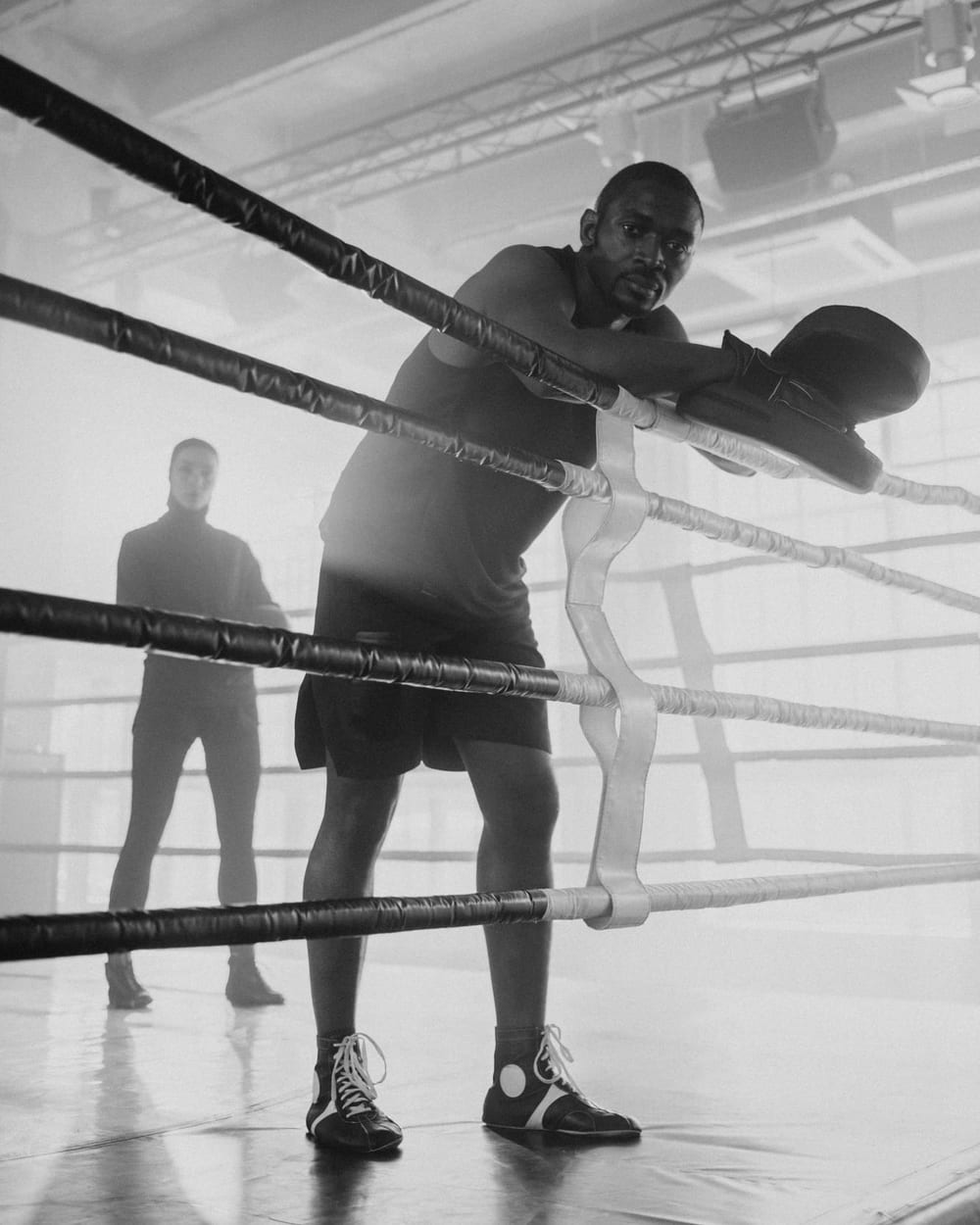
Is sparring safe? Head impact and concussion
Sparring and competition carry head impact and concussion risk that non-contact training largely avoids, because nobody is hitting your head. The 2022 meta-analysis found the head and neck were the most often injured areas in amateur competition. Evidence on long-term brain injury in amateur boxing is weak and contested.
What the reviews say
Loosemore and colleagues (BMJ, 2007) reviewed observational studies of amateur boxing and chronic traumatic brain injury. Of 943 records, 36 studies had usable data and the evidence was generally poor. Among 17 better-quality studies, only 4 found any sign of chronic injury, and only in a minority of boxers. The authors found no strong evidence of a link. That is not proof of safety, and it does not cover professional boxing.
Recognising a concussion
The 2023 Amsterdam consensus statement on concussion in sport (British Journal of Sports Medicine) sets out expert principles for preventing and managing concussion, and flags long-term effects as needing more research.
The NHS says to call 999 after a head injury for being knocked out, being unable to stay awake, a seizure, vision or hearing problems, clear fluid from the ears or nose, new numbness or weakness, or changed behaviour. It advises 111 for vomiting or dizziness, and no contact sports for at least 3 weeks after a head injury.
Who should check with a clinician first, and how do you choose a gym?
People with heart or lung conditions, high blood pressure, joint or spine problems, pregnancy, a past concussion, or who are new to exercise should check with a clinician before starting boxing training. A reputable gym has qualified coaches, offers non-contact classes, supervises beginners and does not push anyone into sparring.
Who should check first
Tell your clinician what the sessions involve, since the athletes studied are not typical beginners. Anyone with ongoing symptoms after a head injury should ask a GP before any contact.
Choosing a reputable gym
- Coaches hold recognised qualifications and first aid training.
- Beginners get an induction on stance, wrapping and safe punching.
- Non-contact classes exist, and sparring is optional, supervised and matched by size and experience.
- Gloves fit, equipment is maintained, and there is a clear policy after a head knock.
What does a 4-week beginner fitness-boxing plan look like?
A beginner fitness-boxing plan can use three short non-contact sessions a week, adding a few minutes each week and keeping early rounds easy to moderate. The plan below is a general illustration, not a prescription, so ask a clinician first if you have health conditions.
The NHS advises 150 minutes of moderate or 75 minutes of vigorous activity a week plus strength work on 2 days. Spreading sessions across the week suits most people, as discussed in weekend warrior versus every day exercise.
Try this: 4-week beginner fitness-boxing plan
- Week 1: three sessions of 5 minutes easy warm-up, then 4 rounds of 2 minutes shadow boxing or light bag work with 1 minute rest. Learn stance and hand wrapping with a coach.
- Week 2: 5 rounds of 2 minutes, adding simple pad combinations with a coach.
- Week 3: 6 rounds of 2 minutes, with 2 rounds faster. Take a rest day between sessions.
- Week 4: 6 rounds of 3 minutes if you feel good, or repeat week 3.
- After each session, note how hard it felt from 1 to 10 and any joint pain the next day.
- If you use a tracker with heart-rate zones and training load, compare it with your rating. Stop and seek advice for dizziness, chest pain or a head knock.
Frequently asked questions
Is boxing good for weight loss?
Boxing may help, but the evidence is limited. In the 2015 pilot trial, adults with abdominal obesity who did boxing improved body fat percentage more than a brisk walking group. The groups were small, and weight also depends on food and consistency.
Is shadow boxing a good workout?
Shadow boxing can be a good workout at a brisk pace, but its intensity depends entirely on you, and no study opened for this article measured it directly. Use the NHS talk test: managing only a few words means vigorous effort.
How often should a beginner box?
Two to three non-contact sessions a week, with rest days between, is a reasonable starting point for many healthy beginners. The NHS advises 150 minutes of moderate or 75 minutes of vigorous activity a week plus strength work on 2 days. Ask a clinician if you have health conditions.
Does boxing cause brain damage?
Non-contact training largely avoids head impact, so it is not the concern. For amateur sparring and competition, a 2007 systematic review found no strong evidence of chronic brain injury but rated the evidence as poor. That does not prove safety, and concussion is still a real injury that needs proper care.
Can I do boxing training without sparring?
Yes. Bag work, pad work, shadow boxing and circuits can all be done without sparring, and many gyms run non-contact fitness classes. Before you join, ask whether sparring is optional.
When should I see a doctor after a head knock?
Call 999 for warning signs such as being knocked out, being unable to stay awake, a seizure, new weakness or clear fluid from the nose or ears. The NHS advises calling 111 for vomiting or dizziness, seeing a GP if symptoms last over 2 weeks, and avoiding contact sports for at least 3 weeks.
Final thoughts
Here is the short recap.
- Non-contact boxing training can be demanding, and small trials suggest fitness benefits, but evidence is limited.
- Sparring and competition add head impact and concussion risk that non-contact training largely avoids.
- Check with a clinician if you have health conditions or are new to exercise, and choose a gym with qualified coaches.
Your turn: Do you prefer bag work, pads or shadow boxing, and what keeps you coming back? Tell us in the comments.
Luna Band
Track your own trends with Luna Band
Sleep, heart rate, HRV, stress and recovery insights in one band, with up to 10 days of typical battery life. No subscription required.
Sources and further reading
- Finlay M, Greig M, McCarthy J, Page R. The physical response to pad and bag based boxing-specific training modalities. Journal of Strength and Conditioning Research, 2018.
- El-Ashker S, Chaabene H, Negra Y, Prieske O, Granacher U. Cardio-Respiratory Endurance Responses Following a Simulated 3 x 3 Minutes Amateur Boxing Contest in Elite Level Boxers. Sports (Basel), 2018.
- Cheema BS, Davies TB, Stewart M, Papalia S, Atlantis E. The feasibility and effectiveness of high-intensity boxing training versus moderate-intensity brisk walking in adults with abdominal obesity: a pilot study. BMC Sports Science, Medicine and Rehabilitation, 2015.
- Alevras AJ, Fuller JT, Mitchell R, Lystad RP. Epidemiology of injuries in amateur boxing: A systematic review and meta-analysis. Journal of Science and Medicine in Sport, 2022.
- Loosemore M, Knowles CH, Whyte GP. Amateur boxing and risk of chronic traumatic brain injury: systematic review of observational studies. BMJ, 2007.
- Patricios JS, Schneider KJ, Dvorak J, et al. Consensus statement on concussion in sport: the 6th International Conference on Concussion in Sport, Amsterdam, October 2022. British Journal of Sports Medicine, 2023.
- NHS. Head injury and concussion. nhs.uk, accessed 2026.
- NHS. Physical activity guidelines for adults aged 19 to 64. nhs.uk, accessed 2026.
Keep reading
General information only, not medical advice. It does not replace guidance from a qualified healthcare professional. Speak to one about any health concern.