Does Hormonal Birth Control Change Recovery, Heart Rate and HRV?
If you take hormonal birth control, can you trust the heart rate and HRV numbers on your tracker, and are they comparable with a friend's? Here is what research says about contraception, resting heart rate, birth control and heart rate variability, and exercise recovery, plus a 6-week plan for tracking your own trend.
Short answer
Hormonal contraception may shift heart rate variability and the monthly pattern of resting heart rate, but evidence is mixed and varies by pill type, dose and method. Effects on exercise performance look trivial on average, though individuals differ. Your own trend over months is more useful than comparing yourself with other people.
Key facts
- A 2026 living systematic review of 16 wearable HRV studies found lower HRV in hormonal contraceptive users, particularly late in the cycle, but the studies were too different to combine.
- A 2024 analysis of 11,590 wearable users found the monthly swing in resting heart rate averaged 2.73 beats per minute in naturally cycling women and 0.28 in pill users.
- A 2020 meta-analysis of 42 studies (590 participants) concluded that pill use might mean slightly inferior exercise performance on average, though any group-level effect is most likely trivial.
- Most studies here are small or observational and use different pills and doses.
- The NHS says blood clots affect up to 1 in 1,000 people using combined hormonal contraception like the pill, and that decisions about the pill are best discussed with a pharmacist or doctor.
In this article
- Does hormonal birth control change heart rate variability?
- Does hormonal birth control change resting heart rate?
- Does hormonal birth control affect exercise performance and recovery?
- Why can tracker data differ between people on and off hormonal contraception?
- Why is comparing yourself with other people's baselines unreliable?
- What should you note when something changes?
- How can you track your own trend for 6 weeks?
- Frequently asked questions
- Final thoughts
- Sources and further reading
Does hormonal birth control change heart rate variability?
Hormonal birth control may lower heart rate variability in some people, especially in the second half of the cycle, but the evidence is mixed and comes mostly from small or observational studies. Results differ by method, hormone type and how HRV was measured, so no single answer applies to everyone.
For background, see what HRV is and why it matters.
What the latest review found
A living systematic review by de Jager and colleagues, published in Sports Medicine in 2026, pulled together 16 studies of wearable-derived HRV involving 19,322 females. Six of those studies, with 16,325 participants, looked at hormonal contraception. The authors reported that hormonal contraceptive users showed lower HRV, particularly late in the cycle.
Combined methods (pills and vaginal rings) were linked with lower HRV late in the cycle. Progestin-only users looked more like naturally cycling people, except at the very end of the cycle.
Why the review is not the last word
The authors could not run a meta-analysis because the studies differed so much in metrics, devices and how cycle phase was defined. Quality was moderate (7 out of 9 on the Newcastle-Ottawa Scale), few studies confirmed cycle phase with hormone tests, and most did not standardise sleep, stress or training load. Lower HRV in a group average is not a health judgement about any one person.
Does hormonal birth control change resting heart rate?
Hormonal birth control appears to flatten the monthly rise and fall of resting heart rate, rather than clearly raising or lowering the average level. The best wearable evidence describes the size of the swing across a cycle, and it is observational, so it shows an association rather than proof of cause.
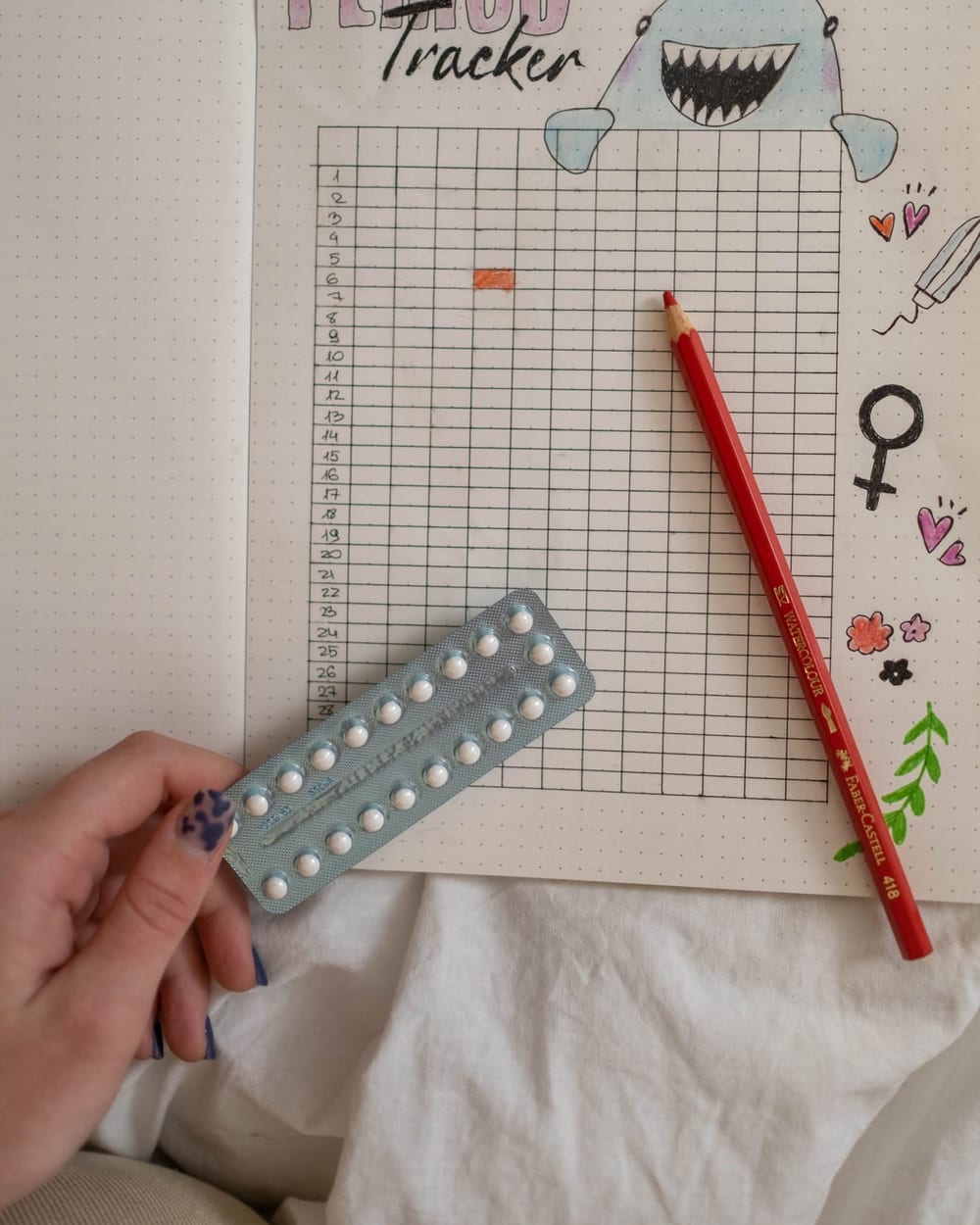
In a 2024 npj Digital Medicine study, Jasinski and colleagues analysed 45,811 cycles from 11,590 wearable users, 1,661 of whom reported taking birth control pills. In naturally cycling women, resting heart rate was lowest around cycle day 5 and highest around day 26, a swing averaging 2.73 beats per minute. In pill users it was 0.28.
HRV (RMSSD) followed a similar pattern: the swing averaged 4.65 ms in naturally cycling women and about zero (negative 0.51 ms) in pill users. Menstruation status was self-reported and hormones were not measured directly.
Does hormonal birth control affect exercise performance and recovery?
Hormonal birth control seems to have a trivial effect on exercise performance for most women on average, though individual responses vary and research on recovery specifically is limited. The strongest evidence is a 2020 systematic review and meta-analysis that looked at the oral contraceptive pill and performance.
Training load matters too: how many rest days you actually need.
What the 2020 meta-analysis found
Elliott-Sale and colleagues, in Sports Medicine, pooled 42 studies with 590 participants. Pill users compared with naturally menstruating women showed a trivial difference that slightly favoured the naturally cycling group (effect size 0.18, with an interval that includes zero). Comparing pill-taking days with pill-free days in the same women, the effect was very close to zero.
The authors concluded that any group-level effect is most likely trivial and recommended individual approaches rather than general rules.
Caveats in the exercise evidence
The review reported that 83% of studies were graded moderate, low or very low quality. Samples were small (a mean of 10 participants), most designs were observational, and pills varied in dose and progestin type. It covered the oral pill, so it says little about implants, injections, rings or hormonal coils.
Myth vs fact
Myth: Hormonal birth control always makes you recover worse and train worse.
Fact: The 2020 meta-analysis found a trivial group-level effect on performance, with low-quality evidence overall, and its authors advised an individual approach. Some people may notice changes and others may not.
Why can tracker data differ between people on and off hormonal contraception?
Tracker data can differ between people on and off hormonal contraception because the hormones involved shape the monthly pattern of resting heart rate and HRV. Naturally cycling people tend to show a rhythm across the month, while combined pill users often show a flatter line, according to wearable studies.
That has practical consequences. A person with a natural cycle may see HRV drift down and resting heart rate drift up before a period and read it as poor recovery, while someone on the combined pill may not see the same wave.
Sleep, alcohol, illness, stress and hard training move these numbers in everyone. Whether the menstrual cycle changes how you should train goes deeper on the cycle side.
Luna Band
Keep your own heart rate and HRV trend next to any change your prescriber makes
Luna Band tracks sleep, resting heart rate, HRV and recovery, so you can note the date of a prescriber-led change and look at your own numbers across several months. It cannot tell you whether a change is caused by contraception or anything else. Luna reports 96.5% heart rate and 93.6% HRV accuracy against Polar chest straps (company-reported), and also states that no sensor is right for every body in every moment.
Why is comparing yourself with other people's baselines unreliable?
Comparing your heart rate and HRV with other people's baselines is unreliable because HRV and resting heart rate vary widely between individuals, and contraception is only one of many reasons. Your own long-run average, measured the same way, is a far better reference point than anyone else's number.
Age, fitness, genetics, medication, sleep habits and sensor type all play a part. If you want to compare, compare yourself with yourself, across weeks and months.
| What changes | What to jot down | What it may mean |
|---|---|---|
| You start, stop or change a method with your prescriber | The date, the product name and your usual sleep and training | A reference date to compare your own trend before and after |
| Resting heart rate or HRV shifts for more than a couple of weeks | Sleep, stress, illness, alcohol, travel and training load | Many everyday causes are possible; contraception is only one |
| New physical symptoms or side effects | What, when and how often | Worth raising with a pharmacist or doctor, not a tracker issue |
| Sudden severe symptoms | Nothing: act first | Get urgent medical help (see below) |

What should you note when something changes?
When something changes with your contraception, note the date, the exact product and anything else going on in your life, and discuss any decision with a prescriber or pharmacist. A tracker can give you context for that conversation, but it cannot decide whether to start, stop or switch anything.
The NHS says that if you still have side effects after 3 months on the combined pill and they are a problem, speak to a pharmacist or doctor.
When to get urgent medical help
The NHS says the risk of a blood clot is very small, affecting up to 1 in 1,000 people using combined hormonal contraception such as the pill. Its blood clots page says to call 999 if you have symptoms of a deep vein thrombosis, such as throbbing pain or swelling in one leg, together with shortness of breath or chest pain. It advises calling NHS 111 or your GP urgently if you suspect a clot in the leg.
Never wait for a tracker reading to confirm a worry. Seek medical advice if you are concerned.
How can you track your own trend for 6 weeks?
You can track your own trend over 6 weeks by recording the same few measures at the same time every morning, plus a short note about your day, and then looking for patterns in your own data. Six weeks covers more than one cycle for many people, though cycles vary.
Try this: 6-week tracking plan
- Weeks 1 and 2: wear your tracker every night and change nothing else. Treat these as your baseline.
- Each morning, write one line: sleep quality (1 to 5), stress (1 to 5), whether you trained hard, any alcohol, and any illness.
- If you have a bleed or pill pack schedule, note the days. Cycle phase may matter for your numbers.
- Weeks 3 and 4: keep the same routine. Compare weekly averages of resting heart rate and HRV, not single days.
- Weeks 5 and 6: look for repeating patterns, such as a regular dip in the same part of the month.
- If your prescriber changes anything, note the date and keep tracking for several months afterwards. Share your notes with them if it helps the conversation.
Frequently asked questions
Does the pill lower HRV?
It may, but evidence is mixed. A 2026 systematic review found lower HRV in hormonal contraceptive users, especially in the second half of the cycle, and also reported that studies varied widely in methods. Some individual studies found no difference. A prescriber can discuss what suits you.
Why does my HRV look flat across the month?
A flatter HRV pattern is common in combined pill users in wearable data. A 2024 analysis found the monthly HRV swing averaged 4.65 ms in naturally cycling women and near zero in pill users. A flat line alone is not a sign of anything wrong.
Should I stop or change my pill because of my tracker numbers?
No, do not change contraception based on tracker data. Decisions about starting, stopping or switching a method belong with a prescriber or pharmacist. The NHS advises speaking to a pharmacist or doctor if side effects continue after 3 months and are a problem for you.
Does birth control hurt athletic performance?
On average, probably only trivially. A 2020 meta-analysis of 42 studies concluded that pill use might mean slightly inferior performance, though any group-level effect is most likely trivial. Quality was mostly low, and individuals respond differently, so notice your own training rather than assuming.
Do hormonal IUDs or implants change HRV the same way?
Not necessarily, and evidence is thinner. The 2026 review found progestin-only users looked more like naturally cycling people for most of the cycle, but these studies were few and varied. Ask a clinician about your own method rather than relying on pill findings.
Can I compare my heart rate with my friend's?
You can, but it will rarely be informative. Resting heart rate and HRV differ with age, fitness, genetics, sensors and contraception. Your own trend, measured the same way over weeks and months, is a more reliable guide than anyone else's number.
Final thoughts
Here is the short recap.
- Hormonal contraception may flatten the monthly pattern of resting heart rate and HRV, but the evidence is mixed and often small.
- Effects on exercise performance look trivial on average, with big differences between individuals and pill types.
- Track your own trend, note dates of any prescriber-led change, and leave decisions about contraception to a prescriber or pharmacist.
Your turn: Have you noticed your resting heart rate or HRV pattern change when your contraception changed, and what helped you make sense of it? Tell us in the comments.
Luna Band
Track your own trends with Luna Band
Sleep, heart rate, HRV, stress and recovery insights in one band, with up to 10 days of typical battery life. No subscription required.
Sources and further reading
- de Jager E, Caulfield B, Angelidi E, MacNamee B, Holden S. Wearable-Derived Heart Rate Variability Across the Menstrual Cycle, Hormonal Contraceptive Use, and Reproductive Life Stages in Females: A Living Systematic Review. Sports Medicine, 2026.
- Jasinski SR, Presby DM, Grosicki GJ, Capodilupo ER, Lee VH. A Novel method for quantifying fluctuations in wearable derived daily cardiovascular parameters across the menstrual cycle. npj Digital Medicine, 2024.
- Elliott-Sale KJ, McNulty KL, Ansdell P, Goodall S, Hicks KM, Thomas K, Swinton PA, Dolan E. The Effects of Oral Contraceptives on Exercise Performance in Women: A Systematic Review and Meta-analysis. Sports Medicine, 2020.
- NHS. Combined pill: side effects and risks. nhs.uk, accessed 2026.
- NHS. Combined pill: what is it?. nhs.uk, accessed 2026.
- NHS. Blood clots. nhs.uk, accessed 2026.
- NHS. Methods of contraception. nhs.uk, accessed 2026.
Keep reading
General information only, not medical advice. It does not replace guidance from a qualified healthcare professional. Speak to one about any health concern, and never start, stop or change a medicine or contraceptive without advice from a prescriber or pharmacist.